
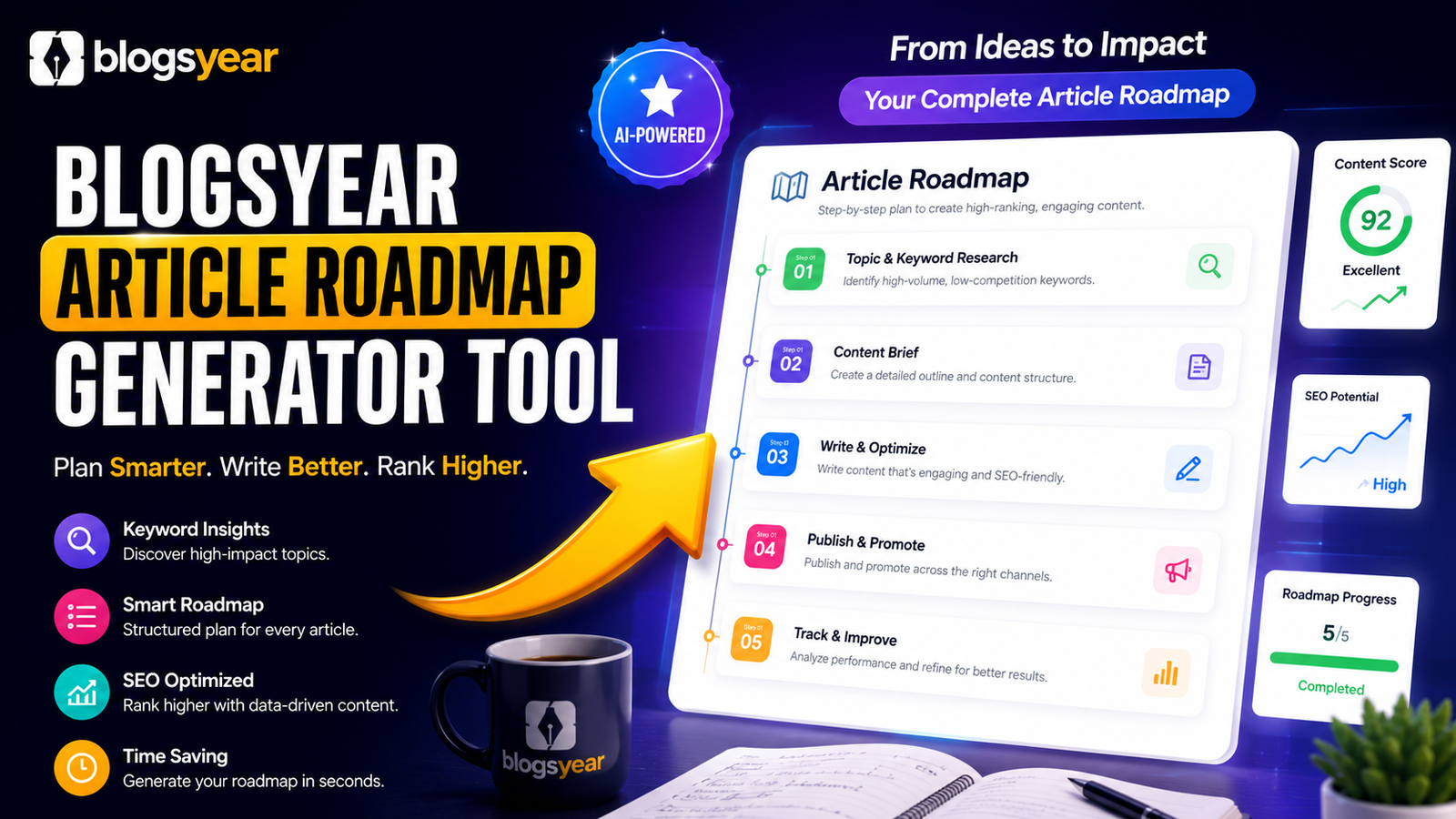
Every successful blog starts with a plan — not just a loose idea of what to write, but a clear, data-backed roadmap that tells you exactly what to publish, when to publish it, and why each piece matters. A blog article roadmap generator takes that planning process and turns it into a repeatable system. Whether you run a personal blog, a business content operation, or a digital agency, having one of these tools in your workflow can save dozens of hours a year while dramatically improving the consistency and quality of what you produce.
What Is a Blog Article Roadmap Generator?
A blog article roadmap generator is a tool — often AI-powered — that maps out a full year’s worth of content topics, publishing schedules, keyword targets, and content types in one structured plan. Rather than brainstorming article ideas one week at a time, you input your niche, target audience, business goals, and desired publishing frequency, and the tool produces a comprehensive editorial calendar. Think of it as a GPS for your content strategy: you input your destination, and it calculates the most efficient route to get there, accounting for seasonal trends, keyword gaps, and competitor positioning.
Why Year-Long Planning Beats Month-to-Month Thinking
Many content creators fall into what marketers call the “content treadmill” — scrambling for topics every week, publishing reactively instead of strategically. A year-long blog roadmap solves this by aligning your content with long-term SEO goals, seasonal search trends, and product or service launch timelines. When you know in January that you need a detailed buyer’s guide ready by October, you have the time to research it properly, gather expert quotes, and build supporting assets. Year-long planning also helps you balance content pillars, ensuring your blog covers awareness, consideration, and decision-stage content in the right proportions throughout the year.
| Planning Approach | Avg. Topics/Year | Keyword Coverage | Consistency Score |
|---|---|---|---|
| Ad-hoc (no plan) | 18–24 | Low | ★★☆☆☆ |
| Monthly editorial plan | 36–48 | Medium | ★★★☆☆ |
| Quarterly roadmap | 48–60 | Medium-High | ★★★★☆ |
| Full-year AI roadmap | 52–104 | High | ★★★★★ |
Key Features to Look for in a Roadmap Generator Tool
Not all roadmap tools are built equally. The best ones combine keyword research integration with content gap analysis, so your planned articles target real search demand rather than guesswork. Look for tools that let you specify your publishing cadence — weekly, bi-weekly, or daily — and that automatically distribute evergreen content alongside timely, trend-driven pieces. Strong tools also categorize articles by funnel stage and content type: how-to guides, listicles, case studies, opinion pieces, and news commentary each serve different reader intents. The ability to export your roadmap into Google Sheets, Notion, or a content management system is another sign that a tool was built for real workflows rather than demos.
How AI Has Changed the Roadmap Generation Process
Before AI entered the picture, building a year-long blog roadmap required a content strategist, an SEO analyst, and several hours of spreadsheet work. Today, AI-powered generators can analyze thousands of competitor articles, identify untapped keyword clusters, and suggest content angles that align with your brand voice — all in under a minute. The shift is significant: what used to be a consulting deliverable is now an accessible tool for solo creators and small teams. More importantly, modern AI generators can flag content decay, identifying old posts in your existing library that are losing traffic and scheduling refresh articles to recover rankings before they drop further.
Building Your Roadmap: A Practical Starting Point
Getting started is simpler than most people expect. Begin by defining three things: your core topic pillars (usually three to five broad themes your blog covers), your publishing frequency, and your target reader’s biggest questions at each stage of their journey. Feed this into a roadmap generator, review the output against your business calendar — noting product launches, industry events, or seasonal peaks — and adjust accordingly. From there, assign article briefs to writers or your own writing schedule at least four weeks in advance. The goal is never to have an empty calendar staring back at you on Monday morning. A well-generated roadmap gives you that peace of mind, replacing creative anxiety with structured momentum.
Frequently Asked Questions
What is a blog article roadmap generator?
It’s a tool that creates a structured, year-long plan of blog topics, keywords, and publishing dates tailored to your niche and goals.
Can a roadmap generator work for small blogs?
Yes — solo bloggers benefit the most since it removes the weekly stress of deciding what to write next.
How often should I update my blog roadmap?
Review it quarterly to account for new keyword trends, algorithm updates, and changes in your business focus.
Does using a roadmap generator improve SEO?
It does — consistent topical coverage and keyword-aligned scheduling are two of the strongest signals for organic ranking improvement.
SEO Tools for Topical Authority: What Actually Works in 2026 Blogsyear.com