
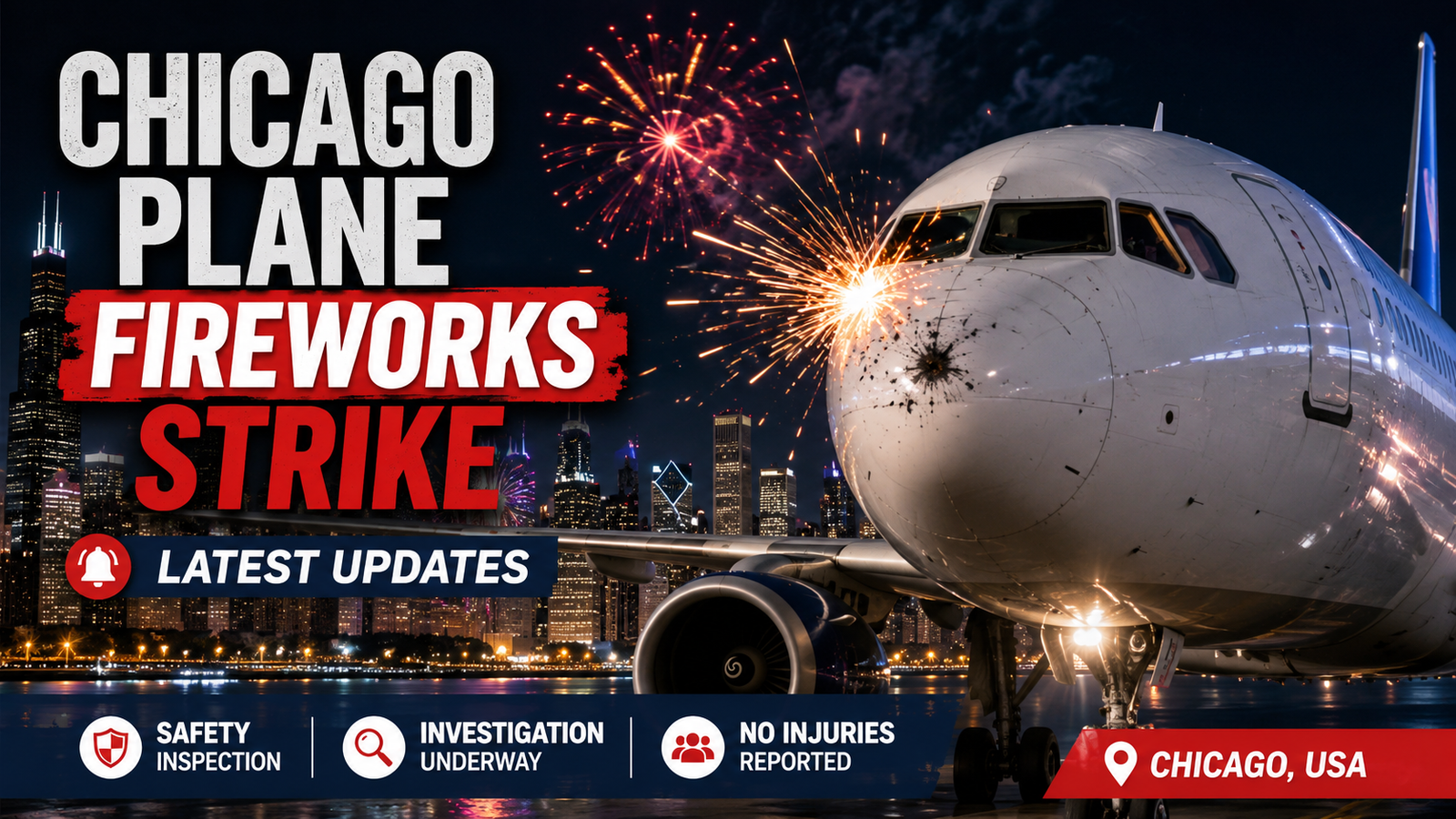
A dramatic aviation safety incident near Chicago drew widespread attention after a commercial aircraft was reportedly struck by fireworks while operating during Independence Day celebrations. According to initial reports, the aircraft encountered fireworks as it was approaching or departing the airport during the evening festivities, prompting an immediate inspection after landing. Fortunately, the flight continued safely, and no injuries were reported among passengers or crew.
The event quickly became a topic of discussion because fireworks and aircraft are expected to remain far apart under strict aviation safety regulations. Experts explain that fireworks launched close to airport flight paths can create unexpected hazards, including damage to an aircraft’s exterior, windshield, or engines. Although modern commercial airplanes are designed to withstand impacts from various airborne objects, any unusual contact during flight requires careful examination before the aircraft returns to service. Aviation authorities and the airline involved began reviewing the circumstances surrounding the incident to determine exactly where the fireworks originated and whether any safety rules had been violated.
Why Fireworks Can Be Dangerous for Aircraft
While fireworks are a traditional part of Independence Day celebrations across the United States, they can present serious risks when used near airports or beneath active flight routes. Aircraft flying at lower altitudes during takeoff or landing are particularly vulnerable because pilots have limited time to react to unexpected obstacles. Even fireworks that explode hundreds of feet above the ground may reach airspace occupied by aircraft during these critical phases of flight.
The greatest concern is not necessarily a direct explosion but the combination of burning debris, smoke, and fast-moving fragments. These can strike the aircraft’s fuselage or windshield or, in rare cases, be drawn toward an engine. Aviation experts emphasize that airports coordinate closely with local authorities before major fireworks displays to ensure launch sites remain a safe distance from flight operations. Unauthorized fireworks, however, are much harder to predict and can create unexpected situations like the one reported near Chicago.
| Incident Detail | Reported Information |
|---|---|
| Location | Chicago area |
| Event | Aircraft reportedly struck by fireworks |
| Flight Status | Continued and landed safely |
| Passenger Injuries | None reported |
| Aircraft Inspection | Conducted after landing |
| Investigation | Aviation authorities reviewing incident |
Although such incidents remain uncommon, aviation regulators treat every report seriously because even minor external damage can affect an aircraft’s continued airworthiness. Maintenance teams typically perform detailed inspections to verify that the aircraft meets all safety standards before it resumes normal operations.
Investigation Focus and Aviation Safety Measures
Following the incident, investigators began gathering information from flight crews, airport officials, and local authorities. They are expected to examine flight data, radar information, maintenance findings, and reports regarding nearby fireworks activity. Determining whether the fireworks display was authorized or launched illegally is likely to be an important part of the investigation.
Commercial aviation operates under multiple layers of safety protection. Airports often issue temporary restrictions around organized fireworks displays, and licensed operators generally coordinate with aviation authorities well in advance. Pilots also receive notices about potential hazards before flights whenever planned aerial activities could affect operations.
Events like this demonstrate why strict coordination is necessary. A single unauthorized fireworks launch near an airport may create unnecessary risks for aircraft carrying hundreds of passengers. Public awareness also plays an important role, as many people may not realize how close aircraft can be during approach and departure, particularly in large metropolitan areas such as Chicago.
Public Reaction and Lessons for Future Holiday Celebrations
News of the reported fireworks strike spread rapidly across social media, with many travelers expressing relief that the aircraft landed safely. Aviation professionals also used the incident to remind the public that commercial flying remains one of the safest forms of transportation thanks to rigorous inspection procedures and well-established safety protocols.
The incident serves as a reminder that holiday celebrations and aviation operations must coexist responsibly. Fireworks can provide memorable entertainment, but they should always be launched in approved locations and according to local regulations. Communities, event organizers, and individuals all share responsibility for maintaining safe airspace, particularly near busy airports.
As investigators continue reviewing the Chicago incident, the findings may help strengthen future safety planning and public education efforts. Whether the event resulted from an unauthorized launch or another unexpected circumstance, the response highlights the aviation industry’s commitment to thorough investigations and continuous improvement. While passengers aboard the affected aircraft reached their destination safely, the incident underscores why even seemingly isolated events receive careful attention from airlines and aviation authorities. Continuous oversight, coordinated planning, and responsible public behavior remain essential to ensuring that holiday celebrations never compromise flight safety.
FAQs
Was anyone injured in the Chicago plane fireworks incident?
No, no passenger or crew injuries have been reported.
Did the aircraft land safely?
Yes, the flight landed safely after the reported incident.
Why are fireworks dangerous near airports?
They can interfere with aircraft during takeoff and landing.
Is the incident under investigation?
Yes, aviation authorities are reviewing the circumstances surrounding the event.
You May Also Like : https://blogsyear.com/cyclospora-cases-are-climbing/