
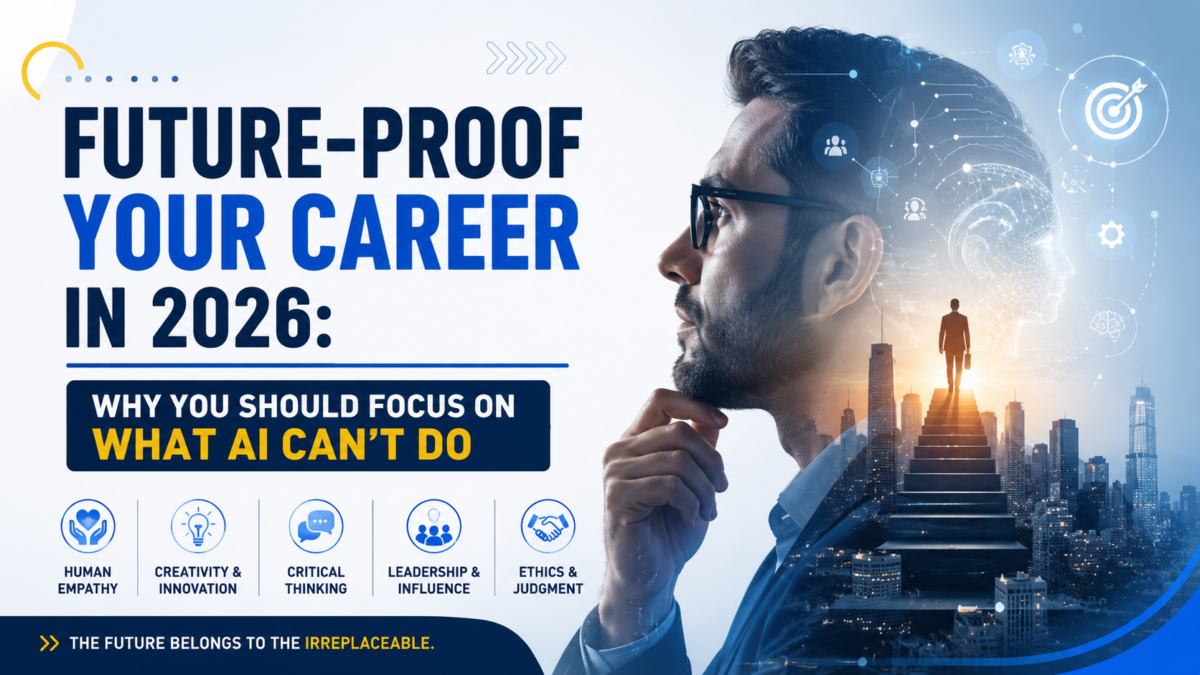
Over the last few years, the dominant question surrounding artificial intelligence in the workplace has been: What can it do? From drafting emails to analyzing complex datasets and coding new features, AI’s capabilities have expanded rapidly. However, organizing your career around AI’s current abilities is a strategic misstep. According to recent editorial analysis by Silicon Canals, the key to professional survival in 2026 is focusing entirely on the opposite: what AI cannot accomplish.
The Flaw in the “What Can AI Do?” Mindset
Building a professional identity around skills that AI easily absorbs—like writing first drafts, generating standard reports, or basic data processing—puts you at high risk. The “can do” list is a constantly moving target. Every time technological limits shift, professionals who rely on baseline tasks find their roles undermined because the capabilities they invested in are exactly the ones AI masters first.
The “Can’t” Bucket: Where Human Value Thrives
To build a durable, resilient career, you must invest in the “can’t” side of the ledger. While AI can deliver a competent answer to almost any well-formed prompt, it struggles with the foundational, messy elements of problem-solving:
-
Problem Identification: AI can answer questions, but it cannot figure out which question actually needs asking in the first place.
-
Contextual Judgment: Walking into a chaotic situation, separating symptoms from the actual disease, and deciding what truly matters are early-stage thinking tasks that models cannot perform.
-
Data Skepticism: AI can process the data you provide, but it cannot inherently recognize when that data is misleading or when the most critical variable isn’t even being measured.
-
Lived Experience: An AI can mimic a human’s tone, but it lacks the genuine perspective forged by building a business, making a hard call, or navigating personal failure. This is a category gap, not just a content gap.
-
Nuanced Understanding: A fast, generic answer from an AI lacks the organizational politics, personality dynamics, and historical context required for high-stakes decision-making.
AI Capabilities vs. Human Competencies (2026 Market Analysis)
| Domain | What AI Can Do (The Moving Target) | What Humans Must Do (The Stable “Can’t” Bucket) |
| Data & Analytics | Process and summarize provided datasets rapidly. | Identify misleading data and missing variables. |
| Communication | Generate competent drafts and sound like a person. | Apply specific lived experience and navigate organizational politics. |
| Problem Solving | Produce competent answers to well-formed questions. | Figure out which question to ask in the first place. |
| Decision Making | Draft memos and outlines after decisions are made. | Sit in the chair and carry the weight of accountability. |
Actionable Advice: Strengthening Your “Human” Muscle
How do you adapt your day-to-day routine? The number one core skill demanded by employers in recent forecasts is analytical thinking. To strengthen this and protect your career moat:
-
Engage in the Messy Work: Form your own view on a complex issue before consulting a generative model.
-
Embrace Friction: Have difficult conversations face-to-face and make judgment calls without polling a tool first.
-
Protect Your Value: If you outsource early-stage thinking, that cognitive muscle atrophies, and the people who lose that muscle are the ones who quietly become replaceable.
Ultimately, while an AI model can draft the memo after a hard decision is made, it cannot carry the weight of having been wrong before, nor can it understand the subtle dynamics of who in the room needs convincing. Your most durable career asset is the judgment that operates one layer above the tool.
Artificial Intelligence (AI) and the Future of Personalized Learning